
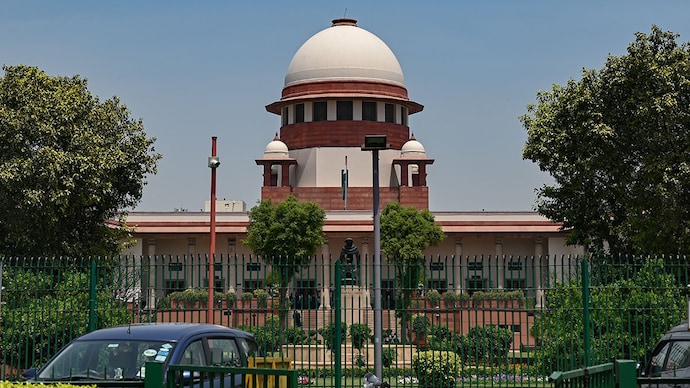
The Supreme Court has come down heavily on Gujarat’s education policy, criticising the state for paying contractual teachers far less than their regular counterparts. The court said that chanting verses like “Guru Brahma, Guru Vishnu” was hollow if teachers continued to be treated as “cheap labour.”Delivering its judgment on August 22, a bench led by Justice Abhay S. Oka restored pay parity for contractual assistant professors in Gujarat’s government engineering and polytechnic colleges, overturning a Gujarat High Court ruling that had denied them equal pay. The court also directed the state to clear arrears with 8% interest.“Teachers are the intellectual backbone of the nation. Paying them a pittance while expecting them to shape young minds is a travesty,” the bench observed.

The case traces back to 2015, when contractual lecturers challenged Gujarat’s policy of paying them just ₹30,000 per month without increments—far less than the over ₹1.16 lakh earned by ad hoc lecturers and ₹1.3 lakh paid to regular faculty for the same work. After years of litigation, the Supreme Court reaffirmed the principle of “equal pay for equal work” and said contractual appointees cannot be treated as second-class citizens.The judgment also noted that many professors had been denied even basic increments for over a decade, calling the policy exploitative.
While the ruling directly applies to college professors, it has reignited debate over the salaries of Gujarat’s schoolteachers, many of whom work on fixed or contractual pay. Education experts say the verdict could have ripple effects across India, where states often rely on contractual teachers to cut costs.
“The Constitution does not permit the State to deprive employees of fair wages,” the court stressed, adding: “We must respect teachers not just in words, but in deeds.”