
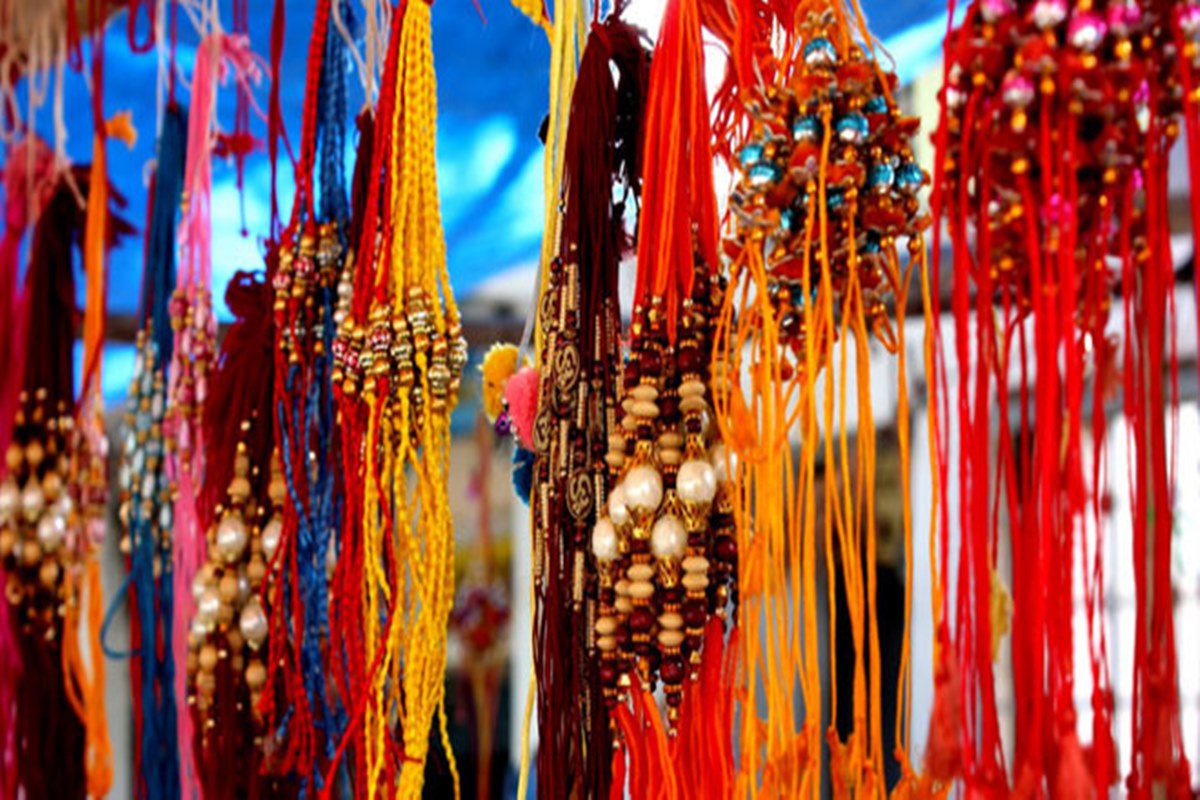
Raksha Bandhan, the festival celebrating the bond of love and protection between brothers and sisters, will be observed on Shravan Purnima this year on Friday, August 28, 2026.

According to astrologer Dr Hemil P. Lathiya, there will be no Bhadra or Vishti Dosha on the day, and the lunar eclipse will not be visible in India. Therefore, devotees can celebrate Raksha Bandhan and tie Rakhi at any time during the day.
Mythological Origins of the Raksha Sutra
According to religious scriptures, the tradition of tying a Raksha Sutra dates back to the Satyuga.
Satyuga: During a battle between the gods and demons, Indra, the king of the gods, sought the blessings of Brihaspati, the divine teacher. On Shravan Purnima, Indra’s wife Shachi tied a sacred Raksha Sutra on his wrist, after which the gods emerged victorious.
Treta Yuga: During this era, priests would tie the Raksha Sutra around the king’s wrist for protection, while people also received the sacred thread from their gurus.
Dwapar Yuga: According to the Mahabharata tradition, when Lord Krishna injured his hand, Draupadi tore a piece of her sari and tied it around his wrist. Krishna later protected Draupadi when she faced humiliation.
Raksha Bandhan in Kali Yuga
The tradition continues today, with sisters tying Rakhi on their brothers’ wrists and praying for their long life, protection and prosperity. Brothers, in turn, pledge to stand by and protect their sisters.
The festival also has several historical traditions associated with it. One well-known account says that when Mewar faced an attack, Queen Karnavati sent a Rakhi to Mughal emperor Humayun seeking his protection and assistance.
Thus, Raksha Bandhan is traditionally regarded not merely as the tying of a thread, but as a festival symbolising love, protection, trust and lifelong commitment.