
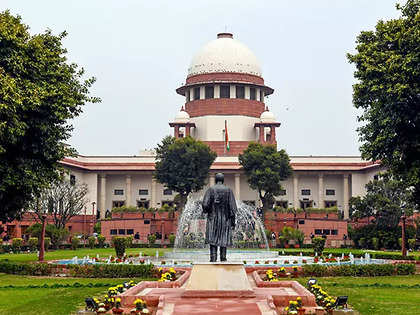
In a significant move aimed at improving road safety and ensuring better compliance with the Motor Vehicles Act, the Supreme Court has extended the compulsory third-party insurance period for newly purchased vehicles by one year. From now on, buyers of new cars will have to obtain four years of third-party insurance, while purchasers of new two-wheelers must take six years of mandatory cover at the time of registration.

The order was passed on Tuesday by a Bench of Justices Sanjay Karol and P.K. Mishra while deciding an appeal filed by National Insurance Company Ltd. The court observed that despite its earlier directions issued in 2018, a large number of vehicles continue to operate without valid insurance, undermining the purpose of compulsory third-party cover.
Calling the situation alarming, the Bench noted that nearly 56 per cent of vehicles on Indian roads are uninsured. It said the widespread non-compliance leaves accident victims and their families struggling to secure compensation through lengthy legal proceedings. Although the Insurance Regulatory and Development Authority of India (IRDAI) and the General Insurance Council had advised against extending the insurance tenure, citing higher premiums and limited impact on compliance, the court held that public interest and road safety demanded stronger measures.
The apex court directed the IRDAI to immediately issue the necessary notifications implementing the revised insurance tenure.
The judgment also introduced a uniform four-layer insurance framework for private vehicles. Under this model, third-party insurance will remain compulsory, while legal liability cover for passengers or pillion riders, personal accident cover for the owner-driver and occupants, and own-damage insurance will be offered as optional add-ons.
To make policy selection more transparent, insurers have been instructed to provide every customer with a standardised option form, both online and offline, allowing buyers to choose optional covers through a simple checkbox system. The IRDAI has also been asked to prepare uniform policy wording and a clear information sheet explaining the difference between mandatory and optional insurance benefits.
Seeking to curb the growing number of uninsured vehicles, the Supreme Court ordered the integration of Automatic Number Plate Recognition (ANPR) cameras with the Insurance Information Bureau and VAHAN databases to automatically identify uninsured vehicles and generate e-challans. It further directed state police to use handheld devices or mobile applications connected to insurance databases for instant verification during enforcement.
The court also asked the Ministry of Road Transport and Highways and the IRDAI to explore technology-based solutions, including pilot projects enabling citizens to verify insurance status and examining the feasibility of linking fuel purchases at petrol pumps to valid motor insurance.
Stressing the need for digital enforcement, the Bench observed that conventional monitoring methods alone are no longer sufficient and must be supported by technology to ensure effective implementation of mandatory insurance laws.
In the case before it, the Supreme Court dismissed National Insurance Company Ltd.’s appeal against a Telangana High Court judgment that awarded compensation to the family of a deceased vehicle owner. The court ruled that a comprehensive motor insurance policy covers the owner while travelling in their own vehicle and cautioned that motor accident claims should not be decided on an overly technical interpretation of insurance contracts.
The court has directed all stakeholders to file compliance affidavits by August 14. The matter is scheduled to be taken up again on August 18 to review the implementation of its directions.