
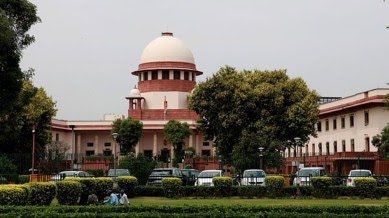
The Supreme Court on Friday directed authorities to end complete restrictions on Delhi Metro stations and long-distance trains, observing that the government should not “use a hammer to kill a fly” while managing planned political protests.

A three-judge bench comprising Chief Justice of India Surya Kant, Justice Joymalya Bagchi and Justice V. Mohana criticised authorities for imposing blanket restrictions on public transport across the National Capital Region (NCR).
The court’s intervention came after petitions challenged travel restrictions imposed ahead of an October 10 protest organised by opposition parties and youth groups, including the Cockroach Janta Party (CJP). The protesters were demanding the removal of Chief Election Commissioner Gyanesh Kumar.
Supreme Court Questions Blanket Restrictions
While examining police communications issued on October 8 and 9, the court pointed out inconsistencies in the orders issued by the Delhi Police and Indian Railways.
Authorities had ordered the complete closure of entry and exit gates at 57 major metro stations. Several Mail and Express trains were also reportedly short-terminated, while train services were reduced.
“Closure amounts to closure,” Chief Justice Surya Kant observed, stressing that public transport should not be brought to a standstill in the name of preventive security measures.
The bench emphasised that security agencies have a responsibility to maintain law and order while ensuring that ordinary citizens are not unnecessarily inconvenienced.
Justice Joymalya Bagchi also noted that restricting metro access, even during certain hours, could effectively amount to a complete ban and affect daily commuters, students and office-goers who depend on public transport.
Government Agrees to Regulated Transport Services
Following the court’s observations, Solicitor General Tushar Mehta assured the bench that the authorities would reconsider the blanket restrictions and take steps to allow regulated movement across metro and railway networks.
The court directed the Delhi Police and the Ministry of Railways to widely publicise the revised travel arrangements so that commuters could plan their journeys and avoid unnecessary inconvenience.
The bench stressed that authorities must exercise caution but ensure that restrictions remain limited to what is necessary to maintain public safety.
Restrictions Imposed Ahead of October 10 Protest
Authorities had imposed strict security measures in sensitive areas of New Delhi, citing concerns about large crowds gathering near Jantar Mantar and central government offices.
Orders issued under Section 163 of the Bharatiya Nagarik Suraksha Sanhita (BNSS) and Section 70 of the Delhi Police Act had also restricted movement near key transport hubs, including New Delhi and Hazrat Nizamuddin railway stations.
Lawyers representing affected citizens told the court that their petitions focused on the difficulties faced by ordinary commuters because of the transport restrictions, rather than on behalf of the protest organisers.
Accepting the government’s assurance that complete shutdowns would be replaced with proportionate restrictions, the Supreme Court emphasised that security arrangements should not unnecessarily disrupt daily life in the national capital.