
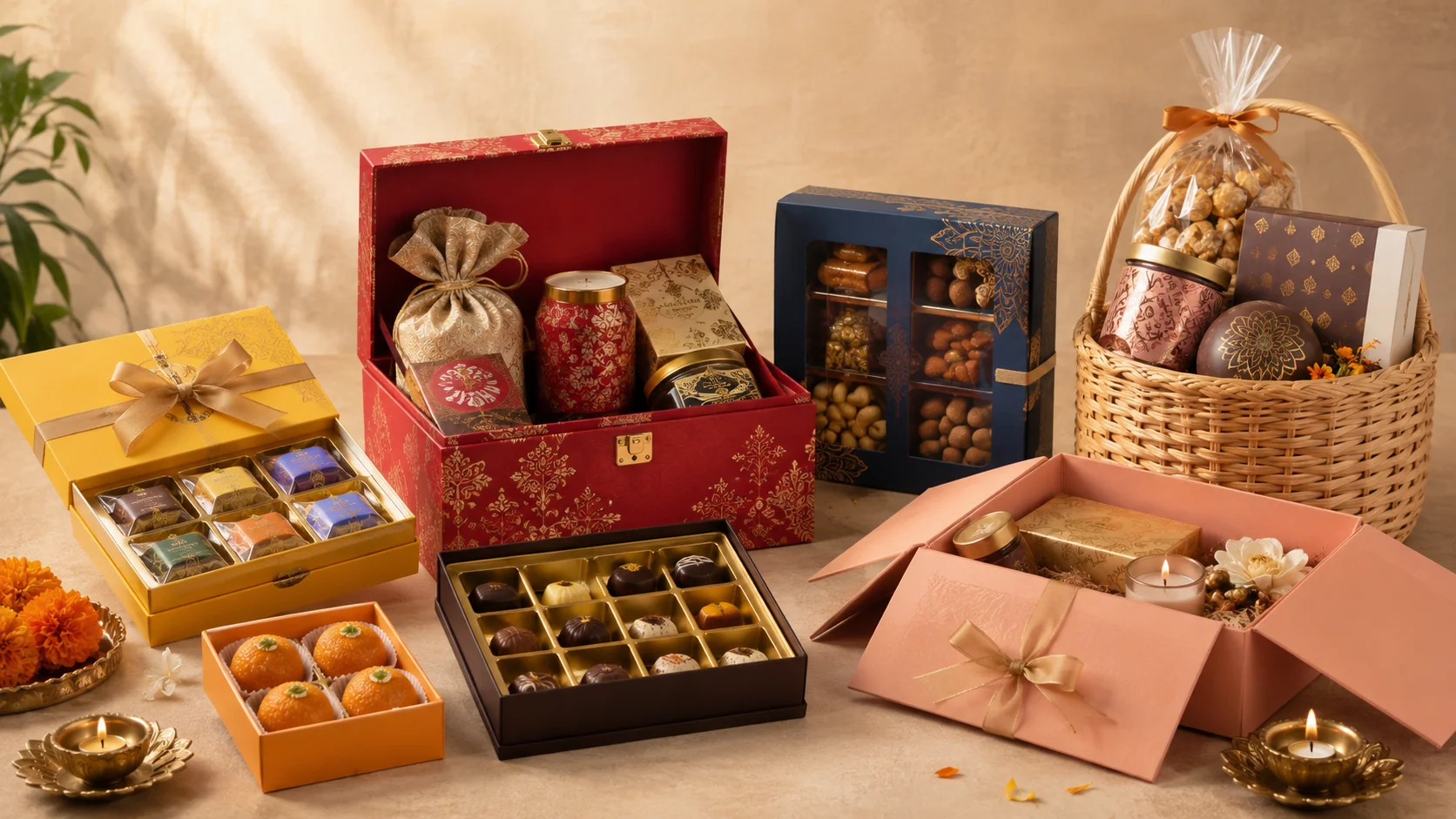
Diwali shopping often means picking up boxes of kaju katli, soan papdi, laddoos and barfis for friends and family. With colourful packaging and attractive gift hampers lining store shelves, it is easy to choose sweets based on how they look. But when it comes to packaged mithai, the information on the label matters more than the box.

A fancy package does not necessarily guarantee good quality. The ingredients, manufacturing date, storage instructions and food safety details can tell you much more about what you are buying. Before adding a box of sweets to your festive shopping basket, here are seven things worth checking.
1. Check the manufacturing and best-before dates
The first thing to look for is when the sweets were manufactured or packed and how long they can be consumed safely. Milk-based sweets such as peda and rasgulla generally have a shorter shelf life than dry fruit-based varieties.
Check the best-before date carefully, especially if you are buying sweets as gifts. Avoid packs with missing, smudged or unclear date markings. Also, consider how much time is left before the product reaches its best-before date.
2. Look for the FSSAI licence number
Packaged food products should carry a valid 14-digit FSSAI licence or registration number, depending on the nature of the food business. This helps consumers identify whether the food business is registered or licensed under India’s food safety regulations.
Make sure the number is clearly printed and legible. If the packaging does not carry the required food safety details, it is better to choose another product.
3. Read the ingredients list carefully
The ingredients are generally listed in descending order of their weight, meaning the ingredient used in the largest quantity appears first.
For instance, if sugar appears before cashews in a box of kaju katli, it indicates that sugar is present in a higher proportion. Similarly, if a sweet is advertised as being made with pure ghee, check whether ghee is actually mentioned in the ingredients list.
Look out for ingredients such as vanaspati, hydrogenated vegetable fat and palm oil, particularly when buying sweets marketed as traditional or ghee-based.
4. Check for added colours, flavours and preservatives
Brightly coloured sweets may look appealing, but it is worth checking what gives them their colour and flavour. Food labels may mention added colours, permitted food additives or INS numbers that identify specific additives.
Not all food colours and preservatives are unsafe; several are permitted under food safety regulations within prescribed limits. However, checking the label helps you understand what has gone into the product rather than relying only on its appearance.
5. Do not overlook the nutrition information
The nutrition table provides information about the amount of sugar, fat, saturated fat and other nutrients in the product.
Check the serving size before interpreting these values. Some manufacturers provide nutritional information per 100 grams, while an individual serving may be considerably smaller.
This information can be particularly useful when buying sweets for elderly family members or people who need to monitor their sugar or fat intake.
6. Read the allergen information
Packaged sweets often contain ingredients such as milk, nuts, wheat and sesame. These can trigger allergic reactions in some people.
Look for the allergen declaration, which is generally placed near the ingredients list. Statements such as ‘contains’ or ‘may contain’ can help identify potential allergens, including those that may be present due to shared manufacturing facilities.
If you are buying sweets for a family gathering or as part of a gift hamper, checking this information can help avoid unnecessary health risks.
7. Compare the MRP with the net weight
An attractive gift box may look larger than it actually is. Decorative packaging, plastic trays and additional layers can take up considerable space without adding to the quantity of sweets.
Check the net weight and MRP before making a purchase. Comparing the price per gram across different brands can help you understand which product offers better value.
Also, check that the printed MRP is clear and has not been altered or covered with another sticker.
A few things to keep in mind while shopping
Apart from reading the label, pay attention to the condition of the packaging. Choose products stored in clean, appropriate conditions and away from excessive heat. Avoid boxes with broken seals, damaged packaging or signs of tampering.
Once opened, check the sweets for any unusual smell, discolouration or change in texture. Follow the storage instructions printed on the pack, particularly for milk-based products.
This Diwali, a little attention to the label can help you make a more informed choice. After all, a box of sweets is meant to add sweetness to the celebrations, not an unexpected health concern.