
The Centre’s Automated Permanent Academic Account Registry (APAAR), introduced as part of the “One Nation, One Student ID” initiative, has come under judicial scrutiny after concerns were raised over data privacy, consent and the role of Aadhaar in student enrolment.

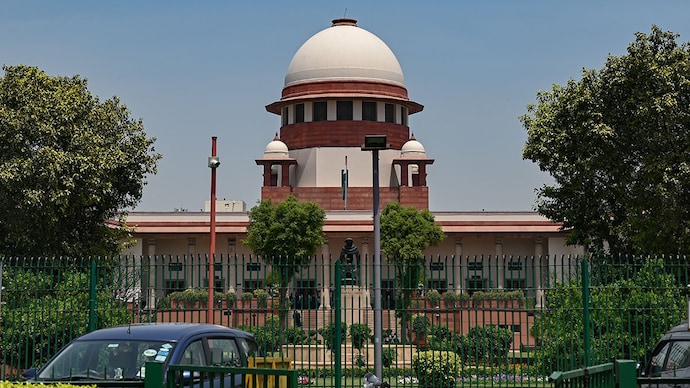
While the government maintains that APAAR is a voluntary initiative aimed at creating a unified digital academic identity, the Supreme Court is now examining whether the scheme is being implemented in a manner that effectively makes it compulsory for students.
What is APAAR ID?
APAAR is a unique 12-digit identification number assigned to students to digitally consolidate their academic journey. Linked with the Academic Bank of Credits (ABC) and accessible through DigiLocker, the platform allows students to maintain a lifelong digital record of their educational achievements—from school education to higher studies, vocational training and skill development programmes.
The initiative is aligned with the National Education Policy (NEP) 2020 and is intended to simplify record-keeping, credit transfers and verification of academic credentials. Students in rural and remote areas can also obtain an APAAR ID through Common Service Centres (CSCs).
Government data shows that over 26.35 crore verified APAAR IDs had been generated across the country as of July 2, 2026.
What is the Academic Bank of Credits?
The Academic Bank of Credits (ABC) is a digital repository regulated by the University Grants Commission (UGC). It enables students to securely store academic credits earned from recognised institutions and use them later if they change courses, transfer institutions or resume their education after a break.
The system supports flexible learning by allowing multiple entry and exit options under the National Credit Framework.
Why is the Supreme Court Hearing the Matter?
The issue reached the Supreme Court through a petition challenging the Aadhaar-linked implementation of APAAR ID. The petitioner argued that the scheme involves large-scale collection of children’s personal data without specific legislative backing and raises serious concerns about the fundamental right to privacy.
The petition also questioned whether the consent obtained from students and parents meets the standards laid down under the Digital Personal Data Protection (DPDP) Act.
During the hearing, the Supreme Court indicated that it would ask the Central Board of Secondary Education (CBSE) to examine these concerns and consider implementing the Orissa High Court’s direction that enrolment under the APAAR scheme must remain strictly voluntary across the country.
A key issue before the court is the allegation that although the scheme is officially voluntary, students allegedly require an Aadhaar-linked APAAR ID for certain CBSE-related academic processes, making participation effectively mandatory.
What Happens Next?
The Supreme Court has not suspended the APAAR scheme. Instead, it has focused on ensuring that students’ rights are protected while the programme is implemented.
The court’s examination is expected to address several important questions:
- Whether APAAR enrolment is genuinely voluntary.
- Whether students and parents are providing informed consent.
- Whether the collection of children’s personal data complies with the DPDP Act.
- Whether the scheme requires statutory backing instead of administrative circulars.
The outcome of the case could shape the future implementation of digital student identity systems across India.
Education Expert Welcomes Digital Initiative, Stresses Privacy
Dr. Alka Kapur, Principal of Modern Public School, Shalimar Bagh, said APAAR has the potential to transform educational record management by creating a secure and lifelong academic profile for every student.
“Being educators, our goal is to prepare students for a rapidly changing world. That’s why APAAR ID seems to be a progressive step towards an efficient future. This initiative can smoothly integrate the academic achievements of the students along with their extracurricular milestones into a secure digital locker. Not only does this simplify students’ academic transitions but it also modernises the educational record-keeping.”
At the same time, she welcomed the Supreme Court’s emphasis on voluntary participation and strong data protection safeguards.
“With all due respect to the Supreme Court’s decision, we uphold the focus on voluntary enrollment and robust data privacy under the DPDP Act. This will allow the education community to adapt to the latest educational technology and safeguard students’ rights. We look forward to collaborating with parents to establish a transparent, digitally secure future for every child while continuing to provide a supportive and inclusive learning environment.”