
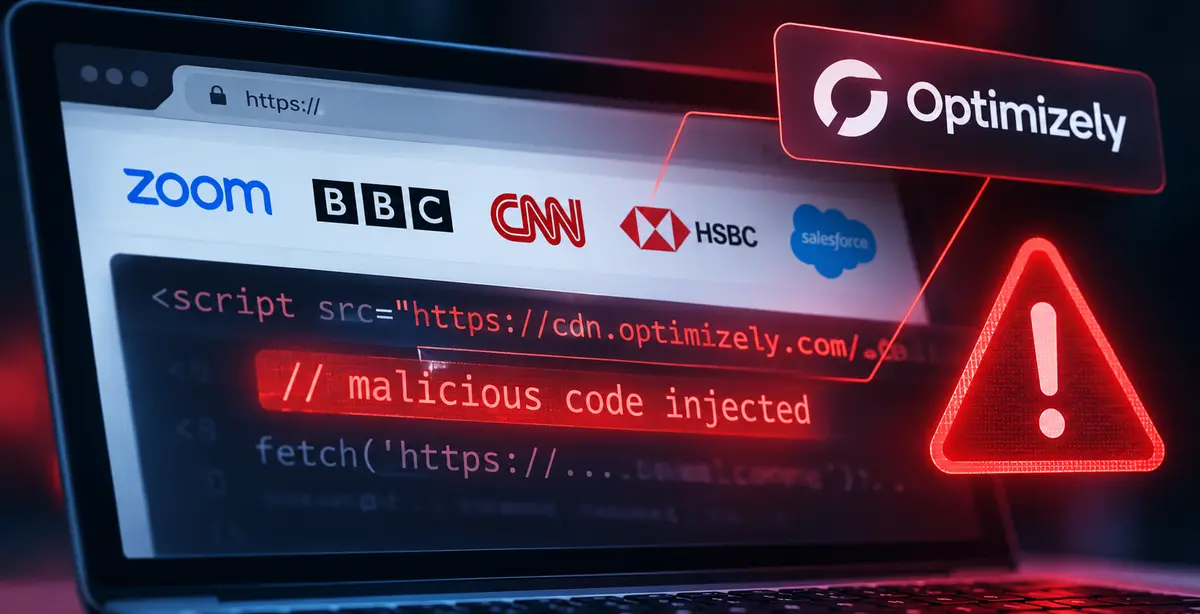
Several major global organisations, including the BBC, CNN, HSBC and Equifax, were reportedly affected by a malware attack on Monday, November 16, after malicious JavaScript code was allegedly distributed through the Optimizely web experimentation platform. More than 170 other brands and companies were also reported to have been impacted.

The incident was first flagged by Report URI, a company specialising in malicious script detection. A researcher from the company described it as a major security incident, stating that malicious JavaScript had been served through Optimizely to some of the world’s largest websites. According to the researcher, 178 organisations were affected, with the malicious scripts reportedly linked to cryptocurrency theft, payment card skimming and iOS exploits.
How the alleged cyberattack unfolded
According to Report URI, the malicious code was distributed through Optimizely, an AI-powered platform widely used by businesses for website experimentation and A/B testing. Cybersecurity intelligence firm Mallory also reported on the incident, identifying other advertising technology platforms where suspicious scripts were allegedly deployed.
The attack reportedly exploited third-party platform access, allowing attackers to target visitors to major websites without directly modifying the organisations’ own website code.
Among the organisations reportedly affected were Peacock, Salesforce, IKEA, Fox News, NPR, the American Society for the Prevention of Cruelty to Animals (ASPCA) and Invisalign.
The malicious scripts allegedly carried out several activities, including replacing legitimate cryptocurrency wallet addresses with addresses controlled by attackers. They also reportedly captured payment card details entered by users into affected website fields and took screenshots of users’ screens.
Cryptocurrency theft estimated at $7,040
Report URI estimated that the attackers’ cryptocurrency wallets had received approximately $7,040 during the incident. According to its report, the amount had been collected within a period of roughly nine hours on November 16, with the assessment recorded at 19:25 UTC.
However, the overall financial impact of the incident remains unclear, as a comprehensive assessment of the damage has not yet been completed. Initial estimates suggest that the financial losses were considerably smaller than those associated with the major Binance-related cryptocurrency theft reported earlier in November.
Optimizely confirms security incident
Responding to the allegations, Optimizely spokesperson Victoria Johnson told Gizmodo that the company had identified a security incident involving the exploitation of a vulnerability in its Experimentation account signup process.
The spokesperson confirmed that an unauthorised party had inserted malicious JavaScript into certain customer projects. Optimizely said it had blocked access to the vulnerable pathway, deployed a security fix and notified all affected customers.
The incident adds to growing concerns over cybersecurity risks associated with third-party digital platforms and website integrations. It comes amid a series of recent service outages in the United States. However, US Homeland Security chief Markwayne Mullin told Fox News that intelligence agencies did not believe those outages were caused by a cyberattack.