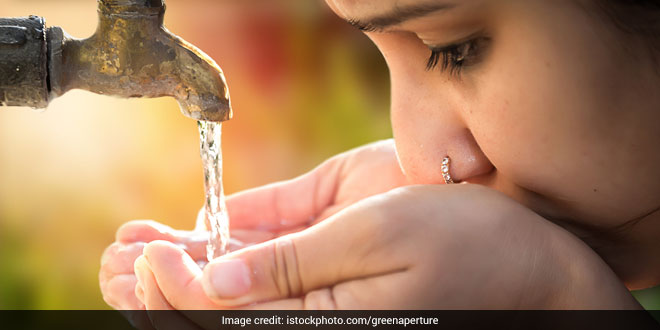
Despite the Centre’s “Nal Se Jal” scheme, a government report has revealed major gaps in access to safe drinking water in Gujarat. According to data from the Ministry of Jal Shakti, around 57% of households in the state do not receive drinkable water through tap connections.

The Functionality Assessment of Household Tap Connections (FHTC) report shows that only 47% of households in Gujarat have functional tap water supply. Several districts continue to have very poor or almost no coverage of tap-based drinking water.
The Central Pollution Control Board (CPCB) has ranked Gujarat 30th among Indian states in the Water Quality Index, which measures factors such as dissolved oxygen, pH levels, biochemical oxygen demand and presence of coliform bacteria.
Districts like Aravalli and Dahod have reported zero functional tap water coverage, while Banaskantha, Surendranagar, Tapi and Amreli remain far below the national average. Even the capital Gandhinagar has only about 31.9% households receiving drinkable tap water, while Ahmedabad stands at around 49%.
Recent cases of typhoid linked to contaminated water in Gandhinagar have raised further concerns about water quality. The data suggests that people in many parts of Gujarat may be consuming unsafe water, increasing the risk of water-borne diseases.
In 19 of the state’s 33 districts, less than half of households have access to drinkable water through taps. Meanwhile, states such as West Bengal, Jharkhand and Chhattisgarh have performed better than Gujarat on the Water Quality Index, according to official data.