
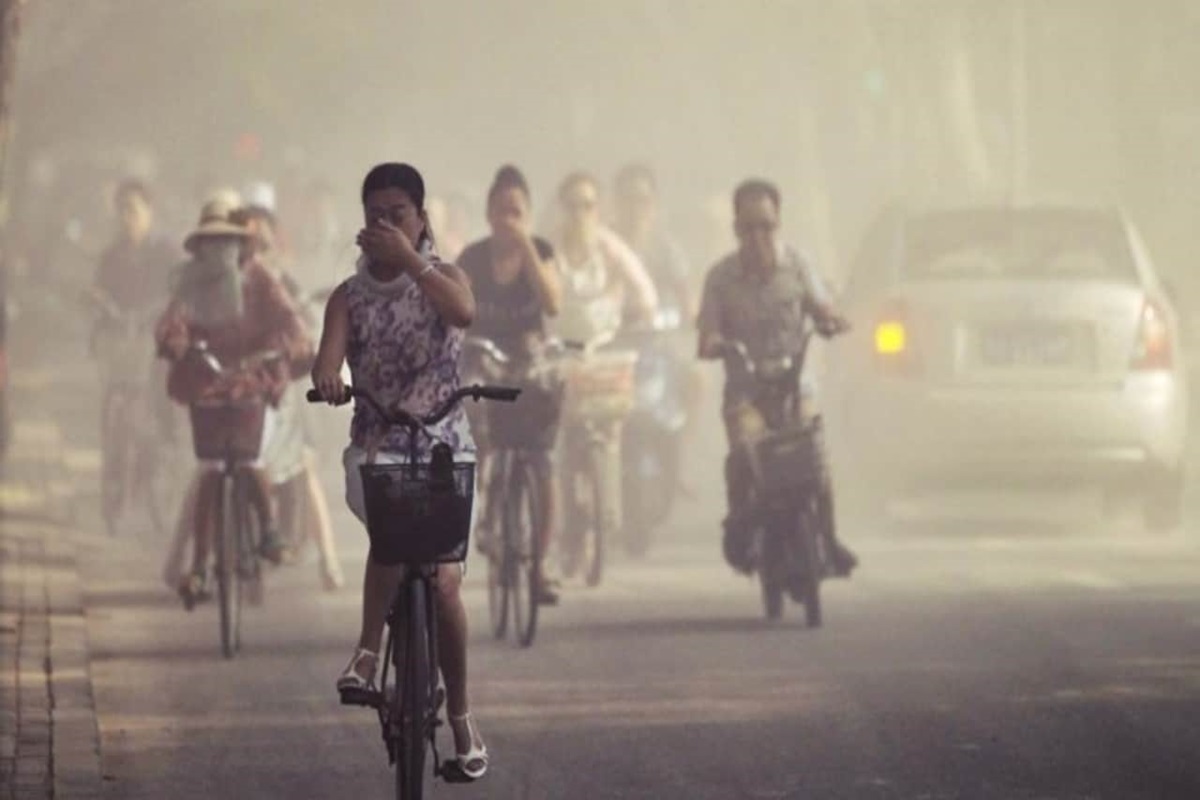
Once ideal for morning walks and jogging, Ahmedabad’s air has now become a health hazard, with pollution levels remaining in the ‘poor’ category on the Gujarat government’s Air Quality Index (AQI) for the past five months.

The primary culprits—rising road dust and heavy traffic during school and college hours—are pushing PM 2.5 and PM 10 levels into unhealthy ranges as early as 6 am. On July 19, dust particle concentration reached 62 micrograms per cubic meter, surpassing the safe limit of 50. In Gyaspur, the morning reading spiked to a dangerous 134 micrograms per cubic meter.
Pollution, compounded by dust from heavy vehicles, poses a serious risk to two-wheeler riders and individuals with respiratory conditions like asthma. In construction-dense zones, PM 10 levels have consistently exceeded 100 micrograms per cubic meter, prompting many residents to wear masks even for routine outdoor activities.
In January and March, air quality dipped into dangerous territory for five days each. This July, pollution has stayed at ‘poor’ levels for 18 consecutive days, raising alarm over deteriorating morning air quality.
Experts warn that living in such an environment can cause health damage equivalent to smoking 647 cigarettes annually. The highest dust pollution in the city has been recorded in the Raikhad area.
Currently, PM 10 levels are especially hazardous along the SG Highway stretch from Circle to Sarkhej, with similar levels reported in Bopal and surrounding areas.