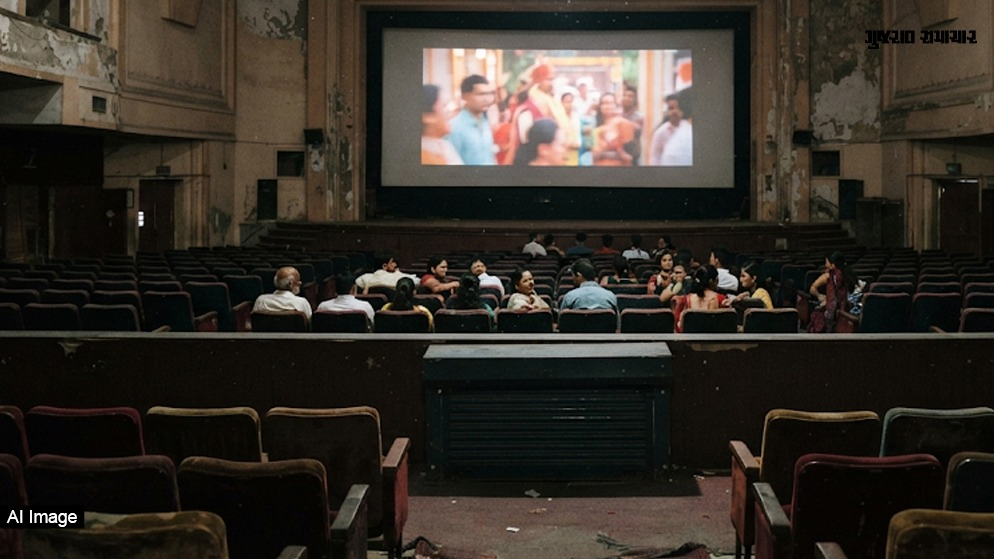
A visit to the cinema was once among the most accessible forms of entertainment, bringing together audiences from every section of society. A newly released film could draw crowds within hours, with cinema halls displaying ‘Housefull’ boards and people queuing for tickets. In those days, watching a movie cost barely Rs 20 to Rs 25. The experience has changed dramatically, with a family outing to a theatre now involving a substantial expense. Tickets priced between Rs 200 and Rs 600, popcorn costing around Rs 250 and cold drinks at nearly Rs 200 have made the big-screen experience increasingly unaffordable for ordinary moviegoers.

The changing economics of cinema-going have altered audience preferences, particularly among middle-class families, who are increasingly choosing OTT platforms over theatres. The convenience of watching films at home or on mobile phones has weakened the attraction of commercial cinema halls. Ahmedabad has felt the impact of this shift, with an estimated 15 to 20 theatres permanently shutting down in the five years following the Covid-19 pandemic.
Theatre closures spread beyond single screens
The 1990s and 2000s represented a high point for cinema halls. Popular films attracted massive crowds, tickets were sometimes sold at inflated prices in the black market, and audiences were willing to watch movies even while sitting on the floor. Today, the picture is markedly different. Many multiplexes struggle to attract viewers, with occupancy on ordinary days reportedly hovering between 30 and 40 per cent.
The crisis, which initially affected single-screen theatres, is now spreading to multiplexes and miniplexes. People associated with the multiplex industry estimate that Ahmedabad has around 55 to 65 such establishments at present. Between 15 and 20 cinema halls have closed over the past five years, and the number could rise further. New theatres are being established only in limited numbers, with most targeting customers willing to pay for premium experiences.
Cinema operators have also begun repositioning their facilities as upscale entertainment destinations. Conventional seats are being replaced by sofas, lounge-style beds and dine-in arrangements. This transformation has made a theatre visit more of a lifestyle choice than an inexpensive recreational activity. Industry veterans point out that viewers now have access to home theatres, mobile streaming services and even screening facilities within residential societies. Consequently, only films that generate strong public interest are drawing people out of their homes.
Premium screenings push ticket prices to Rs 2,500
The difference between cinema ticket prices then and now is particularly striking. A ticket that once cost Rs 25 can now reach Rs 2,500 at premium venues. A multiplex located in a major mall in Ahmedabad is reportedly charging up to Rs 2,500 for a ticket to Ramayana. At this level, the cost of a movie outing can be higher than the price of a domestic air ticket.
For regular screenings, ticket prices generally fall in the Rs 250-Rs 500 range. During holidays and periods of high demand, they can rise to approximately Rs 1,000. Once refreshments and other expenses are added, the overall cost of a family visit can become prohibitive for many households.
OTT, piracy and changing release patterns reshape viewing habits
The decline in theatre attendance is being attributed to several developments in the entertainment industry. The rapid expansion of OTT services and social media has created alternatives that allow audiences to access entertainment without visiting cinema halls.
The economics of film distribution have also changed. Releasing content on digital platforms can be less expensive and more convenient for filmmakers, while the availability of films on OTT services shortly after their theatrical runs gives viewers an incentive to wait rather than buy cinema tickets.
Piracy remains another concern for theatre owners. Unauthorised copies of films sometimes begin circulating on mobile devices soon after their release, further affecting theatrical collections. Together, these factors have reduced the urgency among audiences to watch new films on the big screen.
Cinema operators struggle to balance expenses and declining footfall
Running a multiplex or miniplex involves substantial expenditure, and owners say the financial pressure has intensified. Regular technology upgrades, fire safety requirements, taxes and other operating expenses have increased, while the number of visitors has fallen. According to cinema operators, raising ticket prices has become necessary to meet these expenses and keep establishments running.
However, higher prices risk driving away the very audiences needed to sustain the business. Industry sources anticipate that additional theatres in Ahmedabad could shut down if operating costs continue to rise and footfall does not recover. The situation is reportedly more difficult in smaller cities, where only one or two small cinema halls may still be functioning.
Theatres that once gave Ahmedabad its identity
Ahmedabad’s relationship with cinema was once reflected in the names of its roads and neighbourhoods. Several localities became closely associated with the theatres operating there. Relief Cinema on Relief Road, Mira Cinema in Maninagar, Rupali Cinema at Lal Darwaza, Anupam Cinema in Khokhara, Nataraj Cinema on Ashram Road, Maya Cinema in Kubernagar, Milan Talkies in Saraspur, Rosy Talkies in Kalupur, Madhuram Cinema in Mirzapur, Apsara-Aradhana Cinema in Kankaria and Mohan Cinema in Asarwa were among the city’s familiar landmarks.
The list of theatres remembered by generations of Ahmedabad residents also includes Amrapali, Vasant, Sheetal, Surya, Prakash, Lalitamahal, Kamal, Ashish, Everest, Advance, Mangalam, Alankar, Geeta, Chandrabhanu, Shiva, Aradhana, Roshni, Sonal, Gauri, Galaxy, Ashok, Shalimar, Sangam, LN, Lakshmi, Golden, Light House, Central, Krishna, Novelty, English, Kalpana, Model, Ajanta, Ellora, Usha, Deepali and Anjali.
These cinema halls were once important gathering places and an integral part of the city’s entertainment culture. Their gradual disappearance marks the end of an era in which watching a film in a theatre was an affordable and widely shared experience. Today, Ahmedabad’s cinema industry is attempting to adapt to a market where audiences have more viewing choices but are increasingly selective about spending money on the big screen.