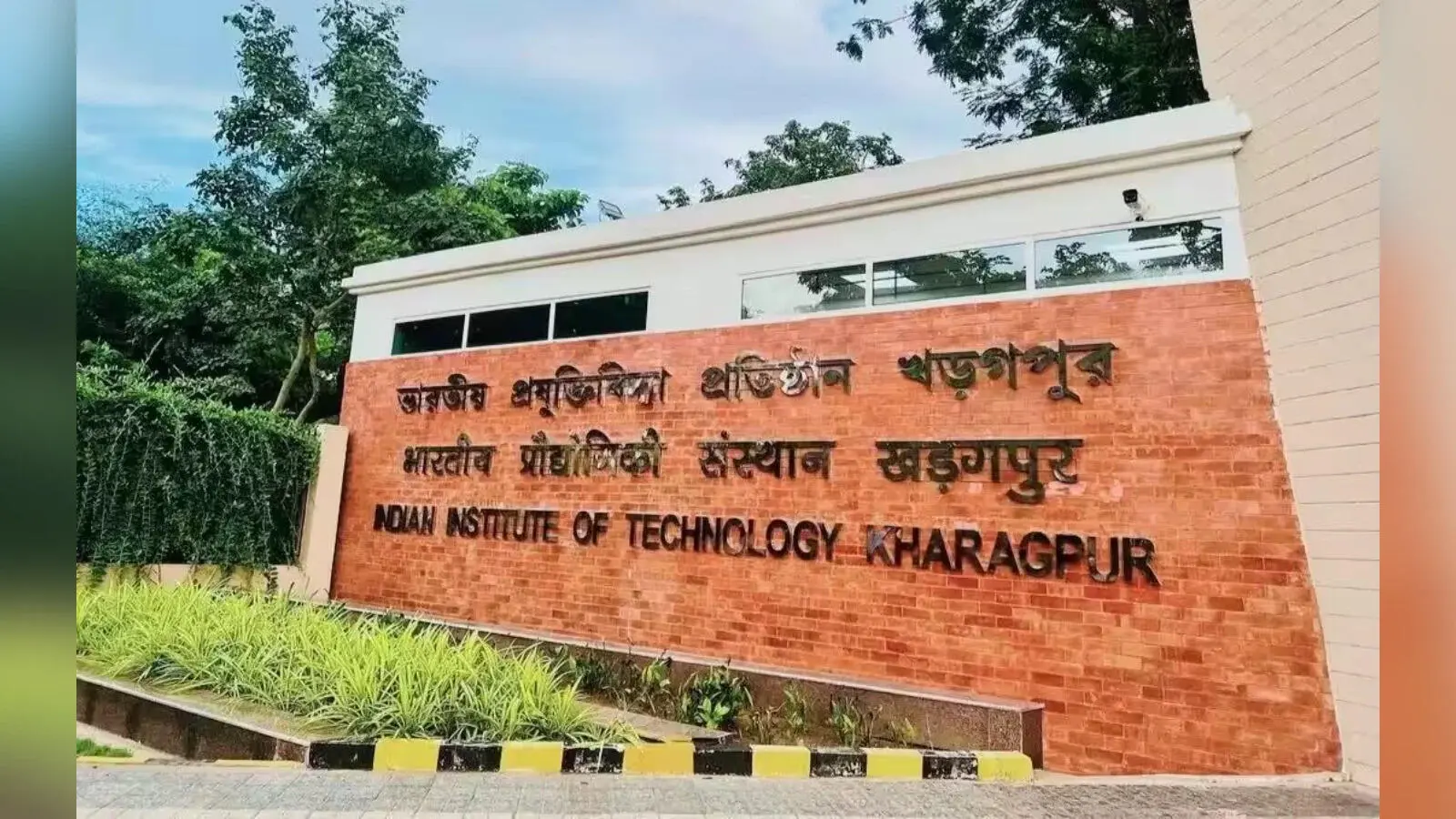
IIT Kharagpur is expanding its academic footprint into postgraduate medical education, becoming the first Indian Institute of Technology to introduce MD programmes recognised by the National Medical Commission (NMC). The institute will admit its first batch for the 2026-27 academic session through its Dr B C Roy Multi-Speciality Medical Research Centre, offering 12 seats across six specialisations.

The programmes will include General Medicine, Radiology, Physiology, Pathology, Community Medicine and Biochemistry, with two seats allotted to each discipline. Admissions will be conducted through the NEET-PG 2026 online counselling process. Eligible candidates can opt for these courses during Round 2 of counselling, subject to the prescribed eligibility criteria and seat availability. Aspirants have been advised to visit the Medical Counselling Committee (MCC) portal and the institute’s official website for admission-related updates.
Integrating medicine with AI and technology
The initiative aims to bring medical education closer to emerging technologies by combining clinical training with IIT Kharagpur’s expertise in engineering and scientific research. Students will get exposure to areas such as AI-driven clinical decision-making, advanced medical imaging, computational pathology, biomedical devices, molecular diagnostics and precision medicine. The institute’s existing research in bioengineering, microfluidics, healthcare diagnostics, artificial intelligence and computational sciences is expected to provide a foundation for interdisciplinary learning.
Established in 1951 as India’s first IIT, the institute sees the introduction of MD programmes as a significant expansion beyond its traditional focus on engineering and technology. Director Professor Suman Chakraborty said the objective was to create an academic environment where clinical expertise could be integrated with engineering, AI and translational research. The institute aims to nurture not only qualified medical specialists but also professionals capable of developing innovative solutions to healthcare challenges. The initiative is also aligned with the vision of Viksit Bharat 2047, which emphasises accessible, affordable and technology-driven healthcare.