
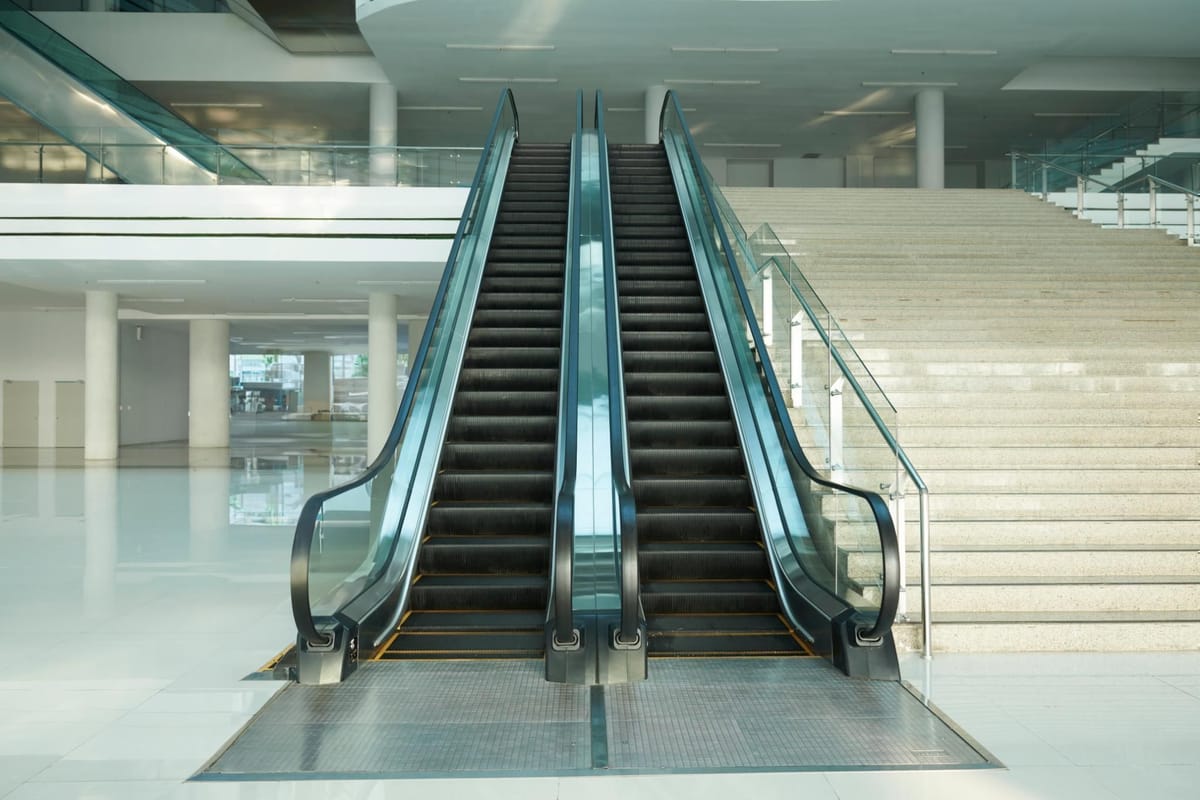
The Maharashtra government has introduced stricter safety regulations for lifts, escalators and moving walkways in residential complexes, commercial establishments and public buildings. Under the new framework, mandatory safety installations, periodic inspections, third-party insurance and regular maintenance will be required to ensure passenger safety and prevent accidents.

As part of the revised norms, all newly installed lifts must be fitted with CCTV cameras. Existing lifts that do not have CCTV cameras, Automatic Rescue Devices (ARD) and Overload Protection Devices (OLPD) will have to install all three safety systems within one year from October 28. The government has also made monthly maintenance by authorised contractors compulsory, along with annual safety audits.
The Maharashtra Energy Department notified the Maharashtra Lifts, Escalators and Moving Walks Rules, 2026, on October 28. The regulations establish detailed requirements for the installation, operation, inspection and upkeep of these facilities. Issued under the Maharashtra Lifts, Escalators and Moving Walks Act, 2017, the new rules also introduce tighter licensing conditions for contractors and greater responsibility for building owners.
Although the legislation was enacted in 2017, its implementation was delayed due to the absence of detailed rules. The latest notification provides the regulatory framework required to enforce the provisions of the Act.
Monthly Maintenance and Annual Safety Audits
Under the new regulations, owners and licence holders will have to arrange inspections and maintenance of every lift, escalator and moving walkway at least once a month through an approved contractor. Contractors must also maintain detailed records of inspections, repairs and other maintenance work.
In addition to monthly servicing, every installation will have to undergo a safety audit at least once a year. The audit reports must be submitted to the Electrical Inspector. Third-party insurance will also be compulsory for lift installations, providing an additional layer of financial protection and accountability in case of accidents or damage.
A senior Energy Department official said the new framework seeks to strengthen safety monitoring and fix accountability in a sector used by millions of people every day in housing societies, shopping malls, office buildings, hospitals and other public establishments.
Stricter Approval and Licensing Requirements
The new rules make prior approval from the Electrical Inspector compulsory for building owners planning to install new lifts or escalators or carry out major modifications to existing systems.
After installation, the equipment will undergo an inspection before an operating licence is granted. The licence will remain valid for 20 years, subject to compliance with the prescribed safety requirements.
The Electrical Inspector will also have the authority to inspect installations and take action against those found unsafe. Equipment that fails to meet safety standards may be prohibited from operating and sealed if the necessary corrective measures are not undertaken.
The rules further require every accident involving a lift, escalator or moving walkway to be reported to the Electrical Inspector and the local police station within 24 hours.
Children Below 12 Must Be Accompanied by Adults
The revised regulations also introduce specific provisions concerning the safety of children and lift operators.
Children below the age of 12 will not be permitted to use lifts or escalators without adult supervision. Housing societies and other establishments will also be prohibited from appointing lift operators below the age of 18.
Additionally, lifts and escalators that have remained non-operational for six months or more cannot be restarted without undergoing the prescribed on-site safety tests. These tests must be conducted by an approved contractor before the equipment is brought back into service.
Round-the-Clock Emergency Support Made Mandatory
The government has also strengthened emergency response requirements for contractors responsible for installing and maintaining lifts, escalators and moving walkways.
Such contractors will have to operate a 24-hour, seven-day complaint and emergency call-handling service to respond to breakdowns and safety-related complaints.
Contractors maintaining more than 50 installations in a particular city, or servicing equipment located beyond 100 km from their headquarters, will additionally have to establish a service centre in the respective area.
The provision is intended to ensure quicker assistance during emergencies and reduce delays in addressing equipment failures and passenger safety concerns.