
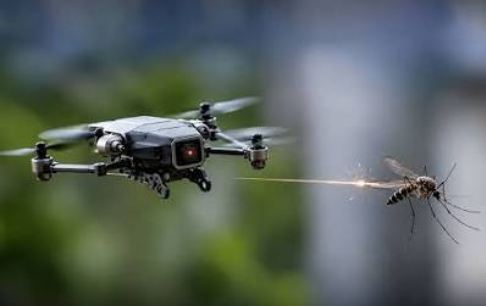
A Gujarat-based start-up’s artificial intelligence (AI)-powered drone technology to detect hidden mosquito breeding sites in hard-to-reach areas has attracted international attention. A 17-member delegation from the Bill & Melinda Gates Foundation of the US and the India Health Fund (IHF), an initiative of Tata Trusts, recently reviewed the technology for its potential wider use in controlling mosquito-borne diseases.

Prime UAV Pvt. Ltd has developed an Advanced Larval Source Management (LSM) system that uses AI and machine learning to identify concealed mosquito breeding sites in inaccessible locations. The drones transmit real-time data to field teams, helping them carry out targeted interventions to reduce mosquito populations.
The technology has already been piloted in collaboration with the Gujarat government in six districts — Gandhinagar, Ahmedabad, Rajkot, Junagadh, Anand and Mehsana — to support efforts to control malaria, filariasis and dengue.
A joint interaction was held on October 21, bringing together the delegation, nine senior officials from central institutions, including the Indian Council of Medical Research (ICMR), Gujarat government representatives, industry experts, and officials from Prime UAV, the Gates Foundation and Tata Trusts.
The discussions focused on lessons from field implementation, operational feasibility and the possibility of integrating the technology into public health programmes.
Pradip Patel, CEO of Prime UAV, said the delegation and government officials assessed the technology’s field performance and operational viability. The review aimed to explore the possibility of replicating the model in other countries.