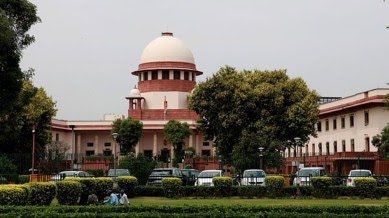
The Supreme Court on Monday issued notices to the Centre, the National Testing Agency (NTA) and other authorities on petitions seeking major reforms in the conduct of the NEET-UG examination, including a shift to computer-based testing (CBT) following the alleged NEET-UG 2026 paper leak controversy.

A Bench of Justices P.S. Narasimha and Alok Aradhe directed that copies of the petitions be served to Solicitor General Tushar Mehta and scheduled the matter for hearing on May 29.
During the hearing, the apex court expressed concern that issues related to examination integrity had surfaced again despite recommendations made after the NEET-UG 2024 controversy by a high-powered committee headed by former ISRO Chairman K. Radhakrishnan.
“It’s sad that they have not learnt their lesson,” the Bench orally observed.
The court noted that after the 2024 controversy, a committee had been formed, its recommendations accepted and a monitoring mechanism put in place. In view of the latest allegations, the court directed the NTA to file an affidavit explaining the status of implementation of the committee’s recommendations and details of the monitoring mechanism set up on November 14, 2024.
The Supreme Court also asked Prof. K. Radhakrishnan to submit a separate affidavit detailing the steps taken to implement the recommendations and comply with earlier court directions.
The petitions, including those filed by the Federation of All India Medical Association (FAIMA) and the United Doctors Front, have sought accountability and systemic reforms in the NEET-UG examination process.
One plea demanded an immediate transition to a fully computer-based examination system, arguing that the present pen-and-paper format involving printing, transportation and storage of question papers remains vulnerable to leaks and manipulation.
The petitioners argued that even after the 2024 controversy, NEET-UG continued under largely the same examination structure. They pointed out that the government had already announced plans to shift NEET-UG to CBT mode from 2027, which indicated acknowledgment of the need for stronger technological safeguards.
Another petition sought replacement of the NTA with a new independent examination authority with statutory accountability, judicial oversight and advanced security measures. A separate plea challenged the functioning of the NTA and sought its dissolution in its current form.
The petitions also requested the formation of a court-monitored committee to oversee reforms in national examinations, along with the introduction of encrypted digital paper transmission systems, biometric verification, AI-based surveillance and stricter cybersecurity measures.
Additionally, the petitioners sought strict criminal action against those allegedly involved in paper leaks and organised cheating rackets, as well as a status report from the CBI on the investigation into the alleged NEET-UG 2026 paper leak.
The pleas argued that allegations surrounding NEET-UG 2026, including claims regarding circulation of “guess papers” before the May 3 examination and the subsequent cancellation of the test on May 12, reflect a recurring problem affecting national-level competitive examinations.