
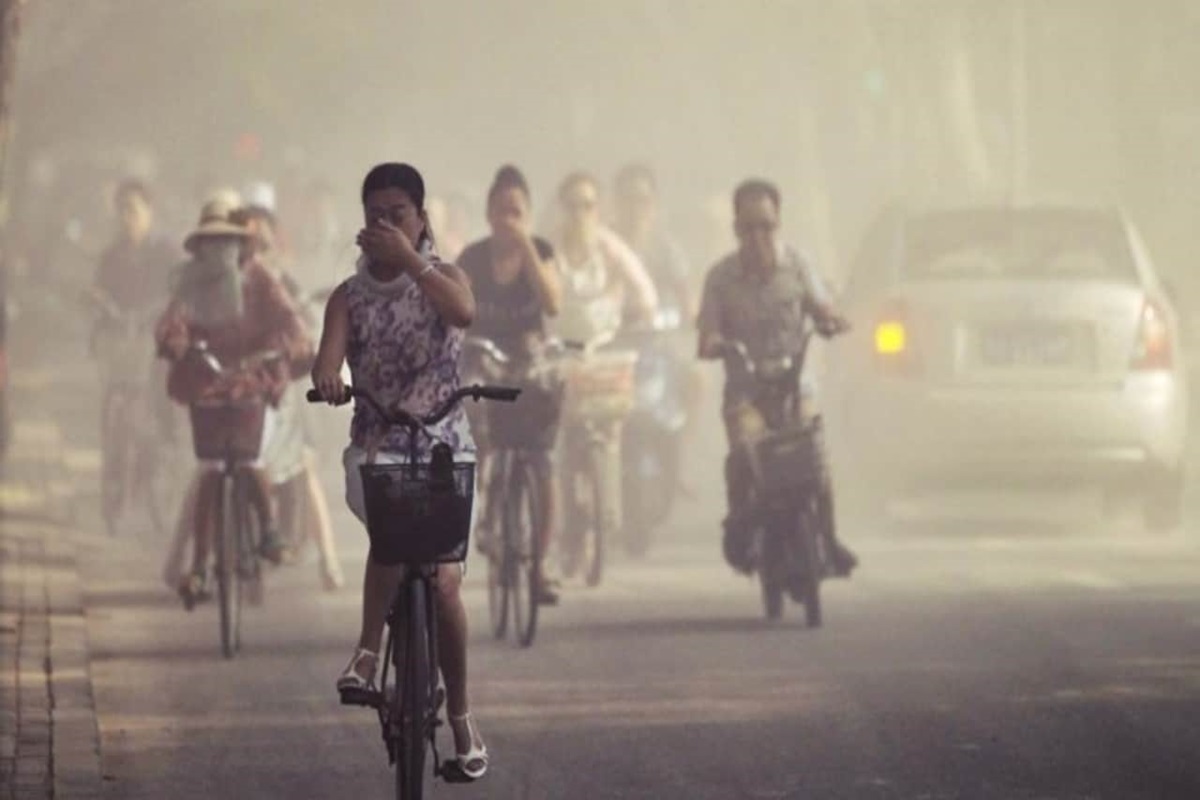
Ahmedabad’s air pollution levels remain high despite the expenditure of 548 crore on air quality measures over the past five years, opposition leaders in the Amdavad Municipal Corporation (AMC) have alleged.

In recent days, the city’s Air Quality Index (AQI) has stayed around 200, a level considered poor and harmful to health. Opposition members claim that a large portion of the funds meant for pollution control is being diverted towards unrelated infrastructure work.
At a recent AMC board meeting, opposition corporators pointed out that 149 senior officials—including the mayor, deputy mayor, and standing committee chairpersons—still use non-electric vehicles even as the civic body urges citizens to adopt EVs and solar energy. They also noted that most municipal vehicles remain diesel or petrol-powered and that many AMC buildings lack solar installations.
While nearly 2,000 crore is spent every year on road resurfacing and new infrastructure, opposition leaders alleged that half of the air quality grant is also being used for road works instead of genuine pollution-curbing efforts.
Concerns were also raised about surrounding towns—Gandhinagar, Bavla, Sanand, and Kalol—receiving funds for air quality improvement, even as Ahmedabad continues to struggle. The standing committee chair clarified that allocations were made according to state government guidelines.
Public transport electrification remains slow: AMTS has only 5 electric buses out of a fleet of 1,020, while BRTS operates 235 electric buses. None of the municipality’s 1,900 waste-collection vehicles are electric.
According to AMC’s fund utilisation:
2024–25:
- 96 crore – roads and footpaths
- 30 crore – green cover and roadside cleaning
- 50 crore – development of new gardens
- 10 crore – EV charging stations
- 6 crore – junction redesign (free left turns)
2025–26 (proposed):
- 50 crore – roads and footpaths
- 12 crore – AMTS EV charging stations
- 18 crore – air quality works in Gandhinagar, Bavla, Sanand, and Kalol
Opposition corporators said that genuine pollution-control efforts—especially switching municipal vehicles to EVs and installing solar power systems—continue to be neglected.