
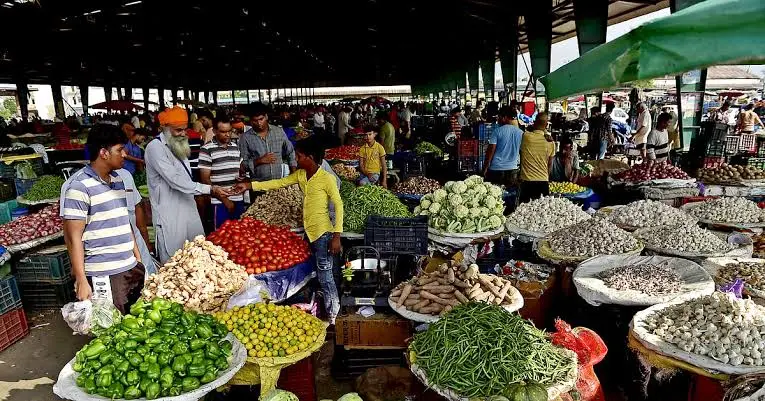
Rising prices of essential commodities have added to the financial burden on households, with India’s retail inflation climbing to 6.09% in October, crossing the Reserve Bank of India’s (RBI) upper tolerance limit for the first time in two years. Retail inflation stood at 5.5% in September.

According to data released by the Ministry of Statistics and Programme Implementation, the increase was largely driven by higher food prices. Inflation in urban areas reached 6.63%, while rural inflation stood at 5.41%.
Food Inflation Rises to 8.94%
Food inflation increased to 8.94% in October from 7.75% in September, putting additional pressure on household budgets. Food items account for around 40% of India’s Consumer Price Index (CPI) basket and remain a major contributor to retail inflation.
Prices of essential commodities, including onions, milk, meat and eggs, have increased. Onion prices have nearly doubled since the beginning of the year. Higher global prices of imported edible oils and other food commodities have also contributed to the rising cost of living.
Inflation Breaches RBI’s Upper Limit
The RBI is mandated to maintain retail inflation at 4%, with a tolerance range of 2% to 6%. With October’s inflation rate reaching 6.09%, it has moved beyond the central bank’s upper tolerance limit.
The RBI has projected average inflation of 5.2% for the current financial year, compared with its earlier estimate of 5%.
Meanwhile, expectations of a possible repo rate hike have emerged. According to a previous Reuters survey, the RBI could increase the repo rate by 25 basis points to 5.75% at its December monetary policy meeting.