
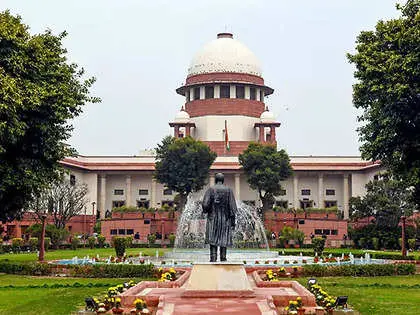
The Supreme Court has reiterated that government employees who remain in judicial custody for more than 48 hours are automatically deemed to be under suspension, even if their department has not issued a formal suspension order. A Bench of Justice J.B. Pardiwala and Justice Manmohan clarified that the provision under the applicable service rules comes into operation automatically once an employee crosses the prescribed custody period.

No Separate Suspension Order Required
The court clarified that deemed suspension is a consequence of the relevant service regulations and does not depend on a separate administrative notification. The employee continues to remain under suspension until the competent authority examines the matter and takes a decision in accordance with the prescribed rules.
Bihar Bribery Case Brings Suspension Rules Into Focus
The issue arose while the apex court was hearing a case involving Vishwajit Singh, who served as the administrator of Sadar Hospital in Samastipur, Bihar. He was accused of seeking a bribe of Rs 4,000 from a contractual employee in return for clearing pending salary payments.
A lower court had initially granted bail to the accused. However, the Patna High Court subsequently overturned the decision and cancelled his bail nearly a year later. The matter reached the Supreme Court, which quashed the High Court’s order and restored the relief granted by the lower court.
Court Flags Delays in Departmental Action
During the hearing, the Bench raised concerns about the manner in which government departments handle employees facing criminal proceedings. It pointed out that administrative authorities sometimes delay taking action against employees despite their prolonged detention.
The court’s observations highlighted the importance of implementing service rules without allowing administrative inaction to undermine the suspension mechanism. Under the deemed suspension provision, the legal consequence follows automatically after 48 hours in custody.
Reposting Accused Officer to Previous Position Questioned
The Bench also examined the circumstances surrounding the officer’s return to service. Despite having spent approximately 15 days in jail, his suspension was subsequently revoked and he was reportedly posted back to his earlier position at the same hospital.
The Supreme Court expressed concern over such a decision, particularly when corruption allegations are involved. It noted that allowing an accused official to occupy the same position could create opportunities to interfere with the investigation, influence witnesses or tamper with relevant records. The court called upon the state government to examine and correct the administrative irregularity.
Personal Liberty Remains Important in Bail Decisions
The Supreme Court also dealt with the legal principles governing the cancellation of bail. It emphasised that the amount allegedly involved in a bribery case cannot, on its own, serve as the deciding factor in determining whether bail should be withdrawn.
The dispute involved an alleged bribe of Rs 4,000, with the Patna High Court disagreeing with the lower court’s assessment while cancelling the bail. The Supreme Court stressed that merely differing with the reasoning of the court that originally granted bail is not sufficient justification for taking away an accused person’s liberty.
The Bench underlined that bail cancellation must be supported by legally sustainable grounds. In particular, the absence of any violation of bail conditions is an important consideration while examining whether an accused person’s liberty should be withdrawn.