
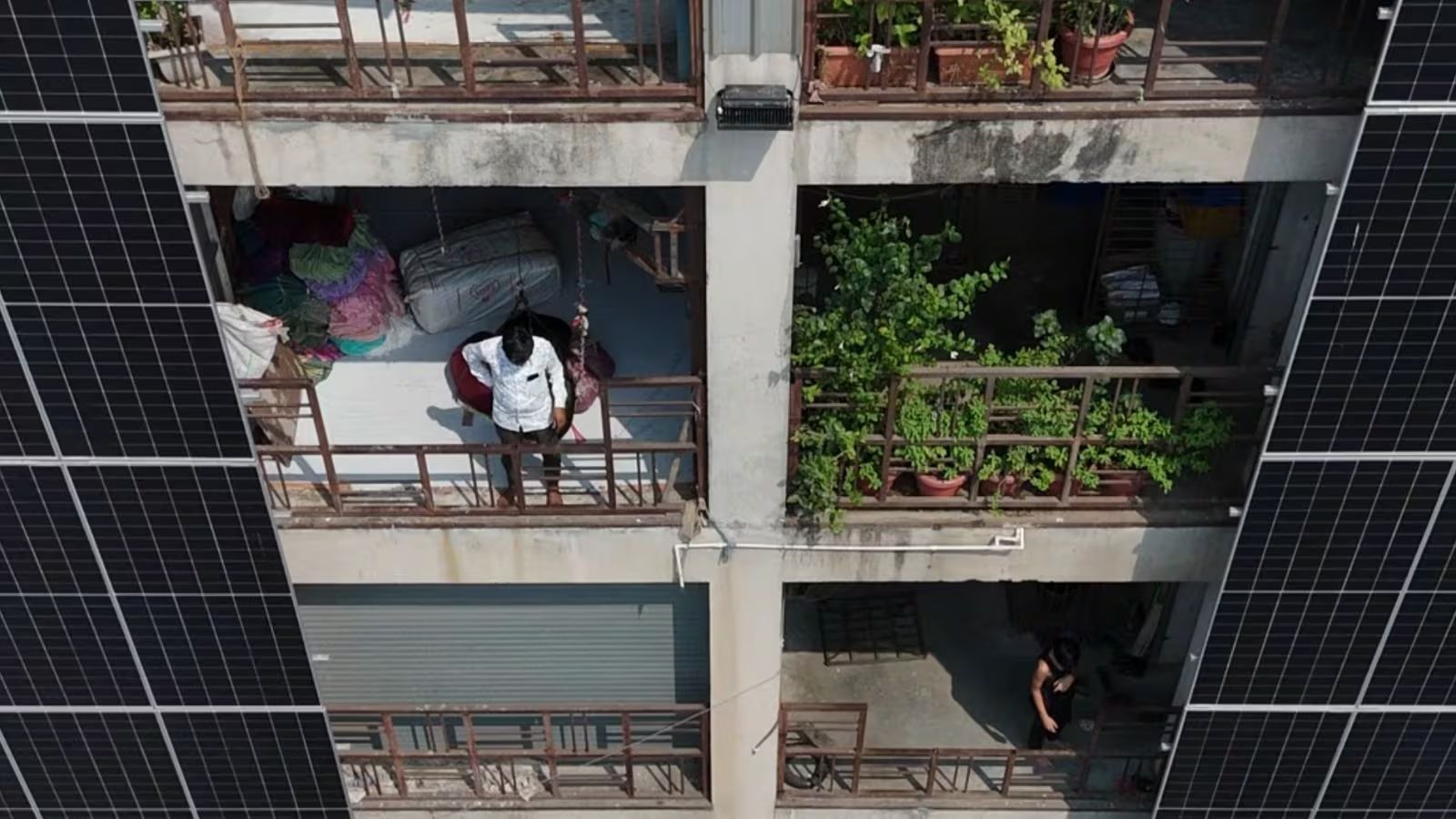
A Surat-based company, Angadia Enterprises, has installed a 25-kilowatt (kW) solar power plant on the south-facing wall of its building in Katargam GIDC, offering an alternative to conventional rooftop solar systems.

The installation uses 42 solar panels mounted vertically on the building’s exterior wall. According to the company, the project cost approximately ₹12 lakh to ₹12.5 lakh and is expected to generate around 18,000 units of electricity annually.
The company has described the concept as “3D Solar”, which uses both horizontal and vertical surfaces to generate solar power. The approach could benefit industrial units and commercial buildings with limited rooftop space.
According to the company, the wall-mounted panels may also reduce direct sunlight reaching the building’s exterior, potentially helping to lower indoor temperatures.
The system uses specialised optimisers to reduce the impact of shading on individual panels and limit losses in overall electricity generation when some panels receive less sunlight.
Ruzal Pareshbhai Angadia, owner of Angadia Enterprises, said vertical walls could provide additional space for solar power generation, particularly where rooftops are insufficient. The company plans to monitor the plant’s performance over the next six to eight months before considering similar installations at other properties.
Plant Expected to Generate 18,000 Units Annually
The company estimates that the solar plant will generate approximately 18,000 units of electricity every year, averaging around 50 units per day or 1,500 units per month. Actual output will depend on weather conditions, sunlight availability, panel orientation and shading.
EV Charging Station Installed Below Solar Panels
In collaboration with Tata Power, the company has also established an electric vehicle (EV) charging station beneath the solar panels.
According to the company, the facility has seven connectors and is designed to serve both public and private users. It can accommodate different types of vehicles, including two-wheelers, three-wheelers and four-wheelers.
Vertical Solar Projects Emerging Across India
Vertical solar installations have also been introduced at other locations across India. In 2017, Tata Power Solar and Dell India collaborated on a 120-kW vertical solar plant in Bengaluru. In 2025, the Delhi Metro installed a vertical bifacial solar plant on the viaduct at Okhla Vihar station.
The Surat installation adds to the growing range of solar energy solutions being explored for industrial and urban areas where conventional rooftop installations may be difficult due to space constraints.